
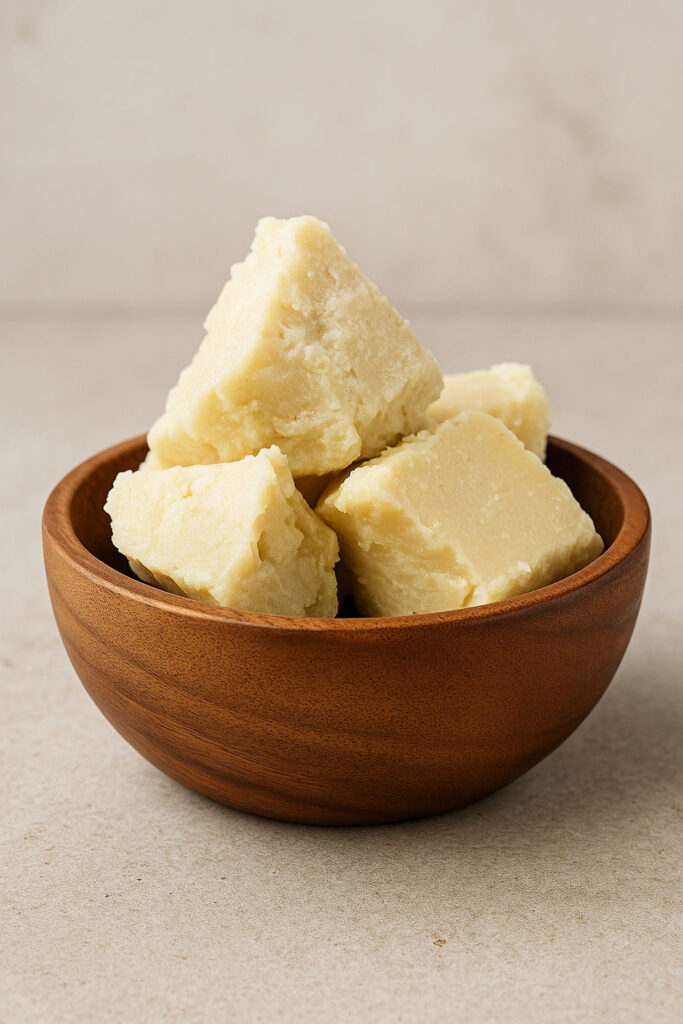
Walk through any health food shop in London and you will find shea butter in dozens of products — moisturisers, lip balms, hair conditioners, body lotions, baby creams. It is one of the most widely used skincare ingredients in the world, beloved by dermatologists, natural beauty enthusiasts, and skincare brands from The Body Shop to L’Occitane.
What most buyers don’t know is that the vast majority of the world’s finest shea comes from West Africa — and a significant portion of it from Ghana. The shea trees growing across Ghana’s northern savannah produce nuts that Ghanaian women have been processing by hand into butter for centuries, long before global beauty brands discovered it.
This guide is for British buyers who want to understand what they’re actually buying, why Ghanaian shea is special, how to spot raw and unrefined quality, what it does for your skin and hair, and where to buy it directly from Ghana. If you’re planning a trip and want to bring some back yourself, our ultimate Ghana travel guide covers everything you need to plan your visit.
🌿 Ghanaian Shea Butter at a Glance
- 🌎 Origin: Northern Ghana — Upper East, Upper West, and Northern Regions
- 🌳 Source: Vitellaria paradoxa (the shea tree) — grows wild, cannot be farmed
- 👩🏾 Production: Hand-processed by Ghanaian women using traditional methods
- ✅ Best grade: Raw, unrefined, Grade A — ivory/cream coloured, mild nutty scent
- 💆 Uses: Moisturiser, hair conditioner, lip balm, baby care, stretch marks, eczema
- ⚠️ Avoid: Bright white, odourless, highly processed shea — most of the goodness has been removed
- 💰 Authentic raw shea (UK): £8–£25 for 200–500g depending on source
- 🛒 Buy: Direct from Ghanaian producers or our shop (coming soon)
What Is Shea Butter and Where Does It Come From?
Shea butter is extracted from the nuts of the shea tree (Vitellaria paradoxa), a wild tree that grows across the semi-arid savannah belt of sub-Saharan Africa. Ghana sits within this belt, and its northern regions are among the most productive shea-growing areas on the continent.
The shea tree is remarkable for several reasons. It grows wild — it cannot be commercially farmed or planted in plantations. It takes between 15 and 30 years to mature and begin producing fruit. And it lives for up to 200 years, producing nuts reliably across generations. In Ghana’s north, shea trees are referred to as ‘women’s gold’ — a name that reflects both their economic importance to rural women and their golden-yellow fruit.
The nuts are collected from the ground after falling naturally, then processed through a labour-intensive multi-stage method that has remained essentially unchanged for centuries. It is this traditional processing — and the quality of Ghana’s wild shea trees — that makes authentic Ghanaian shea butter exceptional.
How Ghanaian Shea Butter Is Made
Understanding the production process helps you appreciate both the quality of the product and the people behind it. Shea processing in Ghana is almost entirely the domain of women — a major source of income for rural communities in the north and an important part of Ghana’s agricultural economy.
The Traditional 8-Step Process
- Harvesting: Shea nuts fall from the trees between May and August. Women collect them from the ground, sometimes walking long distances through the bush.
- Boiling and drying: The nuts are boiled to prevent germination, then dried in the sun for several days.
- Cracking and shelling: The dried nuts are cracked open by hand or with stones to reveal the kernels inside.
- Roasting: The kernels are dry-roasted over a fire. Lighter roasting produces ivory-coloured butter with a mild, nutty scent. Darker roasting produces a stronger, smokier aroma.
- Grinding: The roasted kernels are ground using stone grinding mills into a thick paste.
- Kneading and churning: Water is gradually added and the paste is kneaded by hand for extended periods. The fat gradually separates and rises to the surface.
- Washing and cooking: The separated fat is collected, washed with water to remove impurities, then gently heated to evaporate remaining moisture.
- Cooling and solidifying: The liquid butter is poured into containers and allowed to cool into the finished product.
The entire process for a batch of shea butter takes 20–30 hours of intensive labour. This is why genuinely hand-processed Ghanaian shea costs more than mass-produced alternatives — and why it is worth every penny.
Raw vs Refined Shea Butter: What’s the Difference?
This is the most important distinction for any buyer to understand. The difference between raw, unrefined shea and the refined product sold in most mainstream cosmetics is enormous — not just in appearance and smell, but in actual skincare benefits.
| Property | Raw / Unrefined Shea | Refined / Processed Shea |
|---|---|---|
| Colour | Ivory, cream, or pale yellow | Bright white |
| Scent | Mild nutty, smoky, or earthy aroma | Odourless (scent chemically removed) |
| Texture | Slightly grainy, firm at room temp | Smooth, uniform |
| Nutrients | Full vitamins A, E, F; fatty acids intact | Significantly reduced by processing |
| Processing | Minimal — traditional methods only | Solvent extraction, bleaching, deodorising |
| Skin benefits | Maximum — anti-inflammatory, healing, deeply moisturising | Reduced — primarily acts as a basic emollient |
| Price | Higher | Lower |
The takeaway: if you’re buying shea butter for genuine skincare benefits, raw and unrefined is the only version worth buying. Refined shea has had most of what makes it special removed in order to make it more commercially uniform and shelf-stable.
- Brilliant white colour: Raw shea is never pure white. If it looks like white margarine, it has been bleached and refined.
- No scent at all: Authentic raw shea has a mild, nutty smell. Completely odourless shea has been deodorised.
- Extremely smooth texture: Real shea can be slightly grainy due to natural stearic acid crystals — this is not a defect.
- Additives in the ingredients list: Pure shea butter should contain one ingredient only. Preservatives, mineral oil, and fragrance are red flags.
- Very low price: Genuine hand-processed shea takes enormous labour to produce. Suspiciously cheap ‘shea’ is almost certainly refined or adulterated.
What Ghanaian Shea Butter Does for Your Skin
Shea butter has been used medicinally and cosmetically by West African communities for centuries — and modern dermatology has largely confirmed what those communities have always known.
Deep Moisturisation
Shea butter is rich in fatty acids — primarily oleic, stearic, linoleic, and palmitic acids — which closely mimic the skin’s own natural oils. It is absorbed more readily than many synthetic moisturisers, penetrating beyond the surface layer to moisturise deeply without leaving a heavy, greasy residue. It forms a protective barrier that locks in moisture without blocking pores.
Anti-Inflammatory Properties
Raw shea contains triterpene alcohols — particularly lupeol cinnamate — that have documented anti-inflammatory effects. This makes it effective for soothing conditions including eczema, psoriasis, rosacea, and general skin irritation. Many people with sensitive skin find that raw shea is one of the few moisturisers they can use without reaction.
Vitamins A and E
Raw shea is naturally rich in vitamins A and E — powerful antioxidants that support skin cell renewal, protect against UV damage, and slow visible signs of ageing. These compounds are significantly reduced or eliminated by the refining process, which is why raw shea is so much more beneficial than the refined version used in most commercial products.
Healing and Repair
Shea butter has a long history of use for wound healing, scar reduction, and repair of damaged skin. It is widely used — and increasingly recommended by dermatologists — for stretch marks during pregnancy, post-surgical scars, cracked heels, and chapped lips. The healing properties come from a combination of its fatty acid profile and its natural vitamin content.
Hair Care
Shea butter is exceptionally effective as a hair treatment. It seals moisture into the hair shaft, reduces frizz, conditions the scalp, and provides a natural protective layer for heat-damaged or chemically processed hair. It is a staple in many natural hair care routines, particularly for Afro-textured hair. Apply a small amount to damp hair as a leave-in conditioner, or use as a pre-shampoo treatment.
How to Use Ghanaian Shea Butter
| Use | How to apply |
|---|---|
| Daily body moisturiser | Warm a small amount between palms until it melts. Apply to damp skin immediately after bathing. A little goes a long way. |
| Facial moisturiser | Use a pea-sized amount on clean skin. Best for dry or normal skin types — combination/oily types should patch test first. |
| Lip balm | Apply a tiny amount directly to lips. Works better than most commercial lip balms with no synthetic ingredients. |
| Hair conditioner | Work a small amount through damp hair from mid-length to ends. Leave in or rinse after 30 minutes for a deep condition. |
| Scalp treatment | Massage into the scalp to combat dryness, flaking, and irritation. Particularly effective for natural and Afro-textured hair. |
| Stretch mark prevention | Apply daily to the abdomen, thighs, and breasts during pregnancy. Most effective when started early. |
| Eczema and dry patches | Apply liberally to affected areas 2–3 times daily. For severe eczema, use as an occlusive layer over prescribed treatments. |
| Baby skincare | Safe and gentle for babies — use on nappy rash, dry skin, and cradle cap. No synthetic ingredients to worry about. |
| Cuticle and nail care | Massage into cuticles and nails nightly. Visibly improves nail strength and cuticle health within weeks. |
| Cracked heels | Apply generously to clean feet, cover with cotton socks overnight. Transforms cracked heels within a few weeks. |
Grade A raw, unrefined shea butter sourced directly from women’s cooperatives in northern Ghana. Hand-processed using traditional methods, fairly traded, and shipped to the UK.
Coming Soon — Notify MeGrades of Shea Butter: What the Labels Mean
| Grade | Description |
|---|---|
| Grade A (Raw/Unrefined) | Pure, unrefined shea extracted using traditional water methods. Full nutrients intact. Ivory or cream coloured. This is what you want. |
| Grade B (Refined) | Processed with high heat and chemicals to remove colour and scent. Most nutrients destroyed. Not recommended for therapeutic use. |
| Grade C (Highly refined) | Extracted using hexane or other solvents. Minimal skincare benefit. Often found in cheap commercial products. |
| Grade D (Lowest quality) | Contains contaminants. Not suitable for cosmetic use. |
| Grade E (Adulterated) | Mixed with other fats or oils. Not genuine shea butter. |
When you see ‘raw’, ‘unrefined’, or ‘Grade A’ on a shea butter label, you are getting the genuine article. ‘Refined’, ‘ultra-refined’, or no grade information at all should prompt caution.
Shea Butter and Ghanaian Women’s Cooperatives
One of the most important things to understand about Ghanaian shea butter is who makes it. Shea processing in Ghana is almost exclusively carried out by women — often organised into cooperatives that collectively process and sell their butter, share equipment, and pool resources to access better markets.
These cooperatives are a genuinely powerful economic force in Ghana’s north. Shea income supports children’s school fees, healthcare costs, and household food security in some of Ghana’s most economically marginalised communities. When you buy authentic Ghanaian shea butter from a fair-trade or direct source, you are directly supporting these women and their families.
This is one of the key reasons we have chosen shea butter as one of the first products in the TourispotGhana shop. It is a product with a genuine story, a genuine impact, and a quality that speaks for itself. To understand more about the communities behind the product, our article on traditional community structures in Ghana gives excellent context.
Shea Butter in Ghanaian Culture
Long before shea butter became a global beauty ingredient, it was a fundamental part of daily life in Ghana’s north. It was used as a cooking fat, to protect skin and hair from the harsh harmattan winds that blow down from the Sahara each dry season, in traditional medicine for wounds and burns, and as a trade good exchanged across West African markets for centuries.
Shea trees themselves are considered sacred in many northern Ghanaian communities. Cutting down a shea tree is taboo in parts of the north — the trees are protected not just by economic necessity but by deep cultural and spiritual significance. This has had the important effect of preserving the wild shea parkland across northern Ghana, creating a landscape that supports biodiversity alongside the shea harvest.
Other Ghanaian Skincare Products Worth Knowing
Shea butter is Ghana’s most famous skincare export, but far from the only one worth exploring:
- Black soap (Alata Samina) — traditional Ghanaian soap made from plantain ash, cocoa pod ash, shea butter, and palm oil. Genuinely effective for acne, oily skin, and hyperpigmentation. One of West Africa’s great skincare secrets.
- Moringa oil — extracted from moringa tree seeds (widely grown in Ghana’s north). Rich in oleic acid and antioxidants, excellent as a lightweight facial oil and hair serum.
- Cold-pressed coconut oil — Ghana’s coastal regions produce high-quality versions. Widely used for skin and hair. Always look for cold-pressed, unrefined.
- Palm kernel oil — darker and richer than coconut oil. Traditionally used for hair and skin. Excellent deep conditioner for very dry hair.
- Neem oil — powerful antimicrobial and anti-inflammatory properties. Used in Ghana for skin conditions, insect repellent, and scalp treatments.
Raw shea butter, Ghanaian black soap, moringa oil, and more — all sourced directly from Ghanaian producers. Authenticated, fairly traded, and shipped to the UK.
Coming Soon — Notify MeHow to Buy Authentic Ghanaian Shea Butter in the UK
What to Look For
- Label says ‘raw’, ‘unrefined’, or ‘Grade A’.
- Single ingredient: the ingredients list should say only ‘butyrospermum parkii (shea) butter’. Nothing else.
- Ivory, cream, or pale yellow colour — never pure white.
- A mild, natural scent — nutty, slightly smoky, or earthy. Not artificially fragranced.
- Country of origin stated as West Africa — ideally Ghana, Burkina Faso, or Nigeria.
- Fair trade or direct-trade certification where available.
Where to Buy in the UK
- Specialist African and Caribbean beauty suppliers — found in most major UK cities, particularly London, Birmingham, and Manchester.
- Health food shops — Holland & Barrett and independent health stores sometimes stock quality raw shea.
- Online — look for sellers who can tell you the country of origin, the cooperative or supplier name, and who provide clear Grade A certification.
- TourispotGhana shop (coming soon) — authentic Grade A shea sourced directly from northern Ghanaian cooperatives, shipped to the UK.
What to Avoid
- ‘Shea butter’ products that list it as the fifth or sixth ingredient — these contain minimal actual shea.
- Products labelled ‘shea butter’ that are actually shea blends — check the ingredients list carefully.
- Extremely cheap ‘raw’ shea that is brilliant white and odourless — processed regardless of labelling.
- Products with added mineral oil, paraffin, or synthetic fragrance.
Only Grade A raw, unrefined shea butter with full traceability back to the Ghanaian cooperative that produced it. No confusion. No compromise.
Coming Soon — Notify MeFrequently Asked Questions
Is shea butter safe for all skin types?
Raw shea butter is suitable for most skin types and is non-comedogenic (it does not block pores). However, anyone with a tree nut allergy should consult their GP before using shea butter. For sensitive or reactive skin, always patch test first.
Can I use shea butter on my face?
Yes, though results vary by skin type. Dry and normal skin types typically respond very well. Combination and oily skin types may find it too heavy for daily use — try it as a targeted treatment for dry patches or as a night cream rather than an all-over daily moisturiser.
Does shea butter go off?
Raw, unrefined shea butter has a shelf life of approximately 12–24 months if stored correctly. Keep it in a cool, dark place away from direct sunlight and heat. Do not store in the bathroom. A slightly grainy texture is normal and not a sign of spoilage. An unpleasant rancid smell is.
Is Ghanaian shea butter better than other West African shea?
Shea butter quality is primarily determined by the processing method (raw vs refined) rather than country of origin — high-quality raw shea from Ghana, Burkina Faso, and Nigeria is all excellent. That said, Ghana’s shea cooperatives have invested significantly in quality control and fair-trade certification, making Ghanaian shea particularly reliable when buying from verified sources.
Can shea butter really help with eczema?
There is good evidence that raw shea butter can help manage eczema symptoms, particularly dry, itchy, and inflamed skin. Its anti-inflammatory compounds, combined with its excellent moisturising properties and absence of synthetic irritants, make it well-tolerated by many eczema sufferers. It is not a medical treatment — severe eczema should always be managed with a dermatologist — but as a complementary moisturiser, raw shea has a strong track record.
Where can I buy shea butter when visiting Ghana?
Northern Ghana is the place to buy it directly — markets in Tamale, Bolgatanga, and Wa all have women selling hand-processed shea at very fair prices. You can also find it in Accra’s craft markets and supermarkets. Our Ghana transport guide covers how to get to the north from Accra.
The Bottom Line
Ghanaian shea butter is one of the world’s great natural skincare ingredients — with a story, a community, and a quality that commercial beauty brands can’t replicate in a lab. When you buy raw, unrefined Grade A shea directly from a Ghanaian source, you’re getting something genuinely extraordinary: a product made by hand, by women who have been doing this for generations, from trees that have been growing wild across Ghana’s north for centuries.
The British beauty market is full of products that contain small percentages of refined shea mixed with synthetic compounds. Once you’ve used the real thing, you’ll understand why they bother putting shea in there at all — and why the small amount they include isn’t nearly enough.
Buy authentic. Buy unrefined. Buy direct where you can. And let your skin thank you.
Grade A raw shea butter, Ghanaian black soap, moringa oil, and more. All sourced directly from Ghanaian women’s cooperatives. Authenticated, fairly traded, shipped to the UK.
Notify Me When the Shop Opens